Trail Riding With Your Dog: Planning Adventures That Actually Work

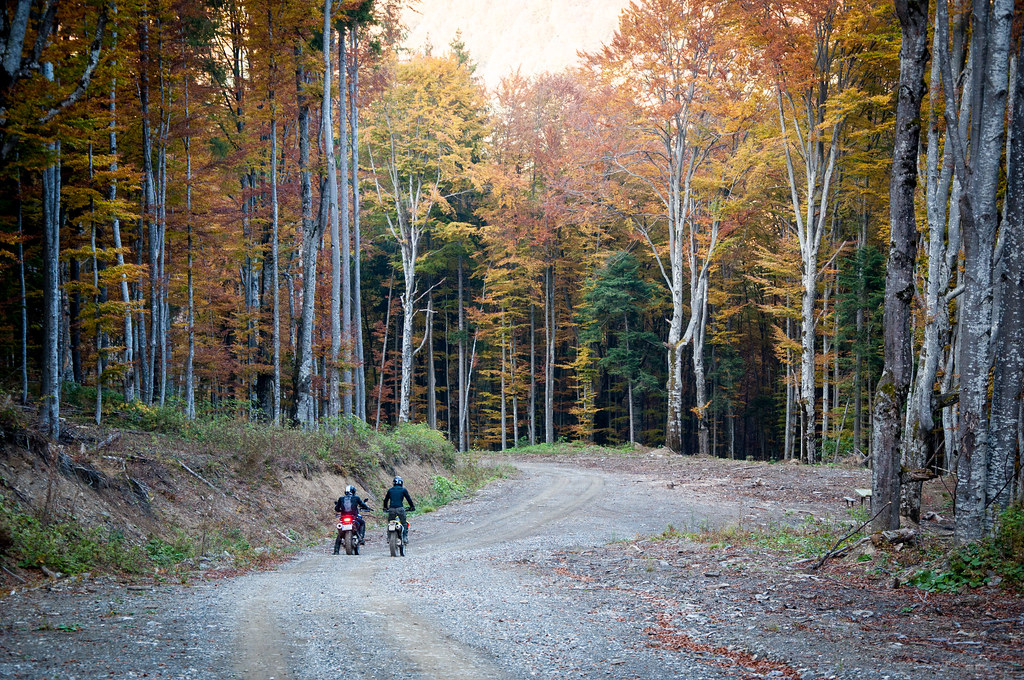
Gravel, forest paths and fire roads are where riding with a dog gets genuinely fun. Here’s how to plan a trail day your dog enjoys as much as you do.
The main point first: trail riding with a dog isn’t road riding on rougher ground. It’s a different activity with a different limiting factor — and that factor is almost never your fitness. It’s your dog’s tolerance for vibration and heat.
Get those two right and a dog will happily do a three-hour trail day. Get them wrong and they’ll be done in forty minutes, whatever their fitness.
This guide covers how to pick trails, how to pace a day around your dog rather than your legs, what gear genuinely matters off-road, and how to read the signals that say “turn around now.” Written for real trails, not perfect ones. 🐾
📋 What’s In This Guide
Why Trails Are Different
On pavement, the ride is smooth and predictable. Off-road, three things change — and all three land on your dog rather than you.
Vibration is the real limiter
You have suspension, wide tyres, bent elbows and knees, and you’re standing up over the rough bits. Your dog has none of that. They’re lying in a box connected fairly rigidly to two wheels.
Constant small vibration is more tiring than occasional big bumps. A dog can brace for one root. They can’t brace for forty minutes of washboard gravel. This is why dogs often seem fine for the first half hour of a trail ride and then get restless — it’s cumulative.
What fixes it: suspension, bigger wheels, softer tyre pressure and real padding. In that order of impact.
Heat builds differently
On the road you maintain speed, so airflow through the cabin is constant. On trails you slow for technical sections, stop at gates, and grind up climbs — and every time you slow, airflow drops while the cabin keeps absorbing heat.
Forest cover helps enormously. Open gravel in full sun is genuinely harder on a dog than the same distance on a shaded road.
You’re further from help
A problem two miles into a forest is a different problem to one two streets from home. That changes how much water you carry, what you pack, and how conservatively you plan.
Whatever distance your dog is comfortable with on pavement, start at half of it on trails. Build up from there. Vibration fatigue is real and it isn’t visible until it’s already happened.
Choosing the Right Trail
Trail choice matters more than any piece of gear. A well-chosen route makes a mediocre setup work; a badly chosen one defeats a great setup.
What makes a trail dog-friendly
- Smooth, compacted surface — rail trails, canal paths, forest fire roads. Loose rock and roots are what wear a dog out.
- Tree cover — shade is worth more than any cooling gadget you can buy.
- Gentle gradients — steep descents are where trailers feel unstable and dogs get thrown forward.
- Width — you need room to pass walkers safely with something wide behind you.
- Water access — a stream or fountain means you can carry less.
- Bail-out points — places you can cut the ride short if things aren’t going well.
What to avoid
- Singletrack — usually too narrow for a trailer, and often prohibited
- Rock gardens and root sections — brutal vibration, real tipping risk
- Sustained steep descents — trailer weight pushes you and braking gets marginal
- Exposed routes in summer — no shade means no recovery for your dog
- Anything with stiles, steps or gates every few hundred metres — miserable with a trailer
Scouting first
Ride a new trail without your dog first if you can. Twenty minutes of scouting tells you more than any trail description online, and lets you find the rough sections, the gates, and the shade.
If you can’t scout, start with the first mile and be genuinely willing to turn around.
Surfaces Compared
| Surface | Dog Comfort | Setup Needed | Good For | Watch Out For |
|---|---|---|---|---|
| Rail trail / canal path | ⭐⭐⭐⭐⭐ Excellent | Any trailer, 16″ wheels | First trail rides, long distances, seniors | Can be busy with walkers at weekends |
| Forest fire road | ⭐⭐⭐⭐ Very good | 16–20″ wheels, padding | Shade, distance, most dogs | Loose gravel on corners |
| Packed dirt / bridleway | ⭐⭐⭐ Good | 20″ wheels, suspension helps | Quiet routes, scenery | Turns to deep mud when wet |
| Loose gravel | ⭐⭐ Tiring | Suspension, lower tyre pressure | Short sections only | Constant vibration; drains dogs fast |
| Rooty singletrack | ⭐ Avoid | Not suitable | — | Tipping risk, often prohibited |
| Sand | ⭐⭐ Hard work | Wide tyres, low pressure | Short beach stretches | Exhausting to tow; stay on damp sand |
“The best trail for your dog is usually one grade easier than the best trail for you. Plan the day around them and you’ll both get further.” 🌲
Alt text: “Cyclist towing a dog bike trailer along a shaded forest fire road suitable for trail riding with dogs”
Planning the Day
Work backwards from your dog
Most people plan a route then wonder if the dog can manage it. Do it the other way round.
Start with how long your dog is comfortable in the trailer on pavement. Halve it for trails. That’s your moving time — not including stops. Then build the route to fit.
Build in real stops
Aim to stop every 25–30 minutes. Not just for water — get your dog out of the trailer. Let them stretch, sniff, walk about for five minutes. This does two things: it breaks up vibration fatigue, and it makes the trailer feel like part of an adventure rather than confinement.
A dog that gets out regularly will happily do far longer days than one that stays in for two hours straight.
The turnaround rule
Decide before you leave at what point you’ll turn back — a time, a landmark, or a water level. Then stick to it. It’s very easy to keep going because you feel good, and dogs mask discomfort well until they suddenly don’t.
Timing the day
In summer, ride early. Trails are cooler, quieter and shadier before 10am. In winter, remember the trail will be darker than the road under tree cover — bring lights even for an afternoon ride.
Tell someone
Basic but worth stating: on a remote trail, let someone know your route and rough return time. Phone signal in forests is unreliable.
Building up over a season
Trail tolerance is something dogs develop, not something they have. Here’s a realistic progression for a healthy adult dog new to off-road riding.
| Stage | Moving Time | Surface | Stops | What You’re Watching For |
|---|---|---|---|---|
| Rides 1–3 | 20–30 min | Rail trail or canal path | Every 15 min | Do they settle at all? Restlessness early means stop. |
| Rides 4–8 | 45 min | Smooth fire road | Every 20 min | Stiffness the next morning — if present, scale back. |
| Rides 9–15 | 60–90 min | Fire road + light gravel | Every 25 min | Do they still get in willingly? That’s the real signal. |
| Conditioned | 2–3 hours | Mixed, shaded | Every 25–30 min | Heat more than distance — shorten in summer. |
| Senior / arthritic | Cap at 45–60 min | Smoothest available | Every 15–20 min | Suspension is essentially required here. |
The column that matters most is the last one. Whether your dog still climbs in willingly tells you more than any distance figure — a dog that starts hesitating is telling you the last few rides were too much.
Trail Gear That Matters
Off-road changes the priority list from road riding.
Suspension — the biggest single upgrade
On pavement suspension is a nice-to-have. On gravel it’s the difference between a dog who settles and one who never does. If you’ll be riding trails regularly, this is where your money goes first.
Wheel size
20-inch wheels roll over roots and stones that 16-inch wheels hit squarely. On trails this matters more than anywhere else.
Tyre pressure
Free, and massively underused. Dropping trailer tyre pressure by a few PSI for gravel adds noticeable cushioning. Just don’t go so low you risk pinch flats — and pump back up for the road ride home.
Repair kit
On the road, a puncture means a short walk. Two miles into a forest with a dog, it means a long one. Carry a spare tube that fits the trailer wheel (often a different size to your bike), tyre levers, and a pump.
First aid — for both of you
A small kit with vet wrap, gauze, tweezers (for thorns and ticks), and antiseptic. Paw injuries from thorns and sharp stones are the most common trail issue when dogs are out walking beside you at stops.
Recommended Kit
Suspension Trailer With 20″ Wheels
The single change that transforms trail riding for a dog. Absorbs the constant small vibration that causes fatigue, and rolls over obstacles instead of slamming into them.
- ✅ Kills vibration fatigue — the actual limiter on trail rides
- ✅ 20″ wheels roll over roots rather than stopping dead against them
- ✅ Quieter on gravel, which matters for sound-sensitive dogs
- ✅ Best option by a distance for senior or arthritic dogs
- ⚠️ Heavy and bulky — genuine overkill if you only ride pavement
Opens Amazon.com · Prices update live
Trail Repair Kit With Mini Pump
A puncture on the road is inconvenient. A puncture deep in a forest with a dog is a long walk. This is the kit that turns a ruined day into a ten-minute stop.
- ✅ Gauge lets you drop pressure for gravel and pump back up for the road home
- ✅ Compact enough to live permanently in the trailer pocket
- ✅ Handles both bike and trailer wheels
- ⚠️ Check your trailer’s tube size — it’s often different from your bike’s
- ⚠️ Practise a tube change at home before you need it on a trail
Opens Amazon.com · Prices update live
Trail Dog Boots & Paw Balm Set
Your dog will be out of the trailer at every stop — on gravel, thorns and hot stone. Paw injuries are the most common trail complaint, and the easiest to prevent.
- ✅ Protects against thorns and sharp gravel at rest stops
- ✅ Balm shields pads from hot stone in summer and salt/ice in winter
- ✅ Dual straps actually stay on — single-strap boots come off constantly
- ✅ Useful well beyond cycling, on any rough-ground walk
- ⚠️ Introduce boots at home first — most dogs walk oddly for the first few minutes
Opens Amazon.com · Prices update live
Compact Dog First-Aid Kit
Small, light, and the thing you’ll be very glad of once. Built around the injuries that actually happen on trails — cuts, thorns and ticks.
- ✅ Tick remover — essential in wooded and grassy areas
- ✅ Vet wrap sticks to itself, not fur, so it works one-handed
- ✅ Small enough to live in the trailer permanently and be forgotten about
- ✅ Covers you for human scrapes too
- ⚠️ Add your vet’s number and the nearest emergency vet to the case
Opens Amazon.com · Prices update live
Riding Technique Off-Road
Line choice is now your suspension
You can’t change the trail, but you choose where the wheels go. Actively steer around the rough stuff — remember the trailer tracks inside your line through corners, so give obstacles more room than you need for yourself.
Descend slower than feels necessary
Trailer weight pushes you downhill and lengthens braking dramatically on loose surfaces. Feather the brakes early and continuously rather than grabbing them late. On steep or loose descents, walking beside the bike is a perfectly reasonable choice.
Climb seated
Standing up rocks the bike side to side, which the trailer transmits straight into the cabin as a swaying motion. Stay seated, drop a gear earlier than usual, and spin.
Ruts and washboard
Cross ruts at an angle, never ride along them — a trailer wheel dropping into a rut is the classic tipping scenario. On washboard gravel, slowing down helps far more than speeding up.
Gates and obstacles
Unclip and lift rather than dragging the trailer over a stile. Bouncing it over an obstacle sends a jolt straight through your dog’s spine.
Most trailer tip-overs happen the same way: a wheel drops into a rut or off a trail edge while cornering. Slow down before corners rather than during them, and stay away from soft edges. Wide, slow and boring is the right approach with a dog behind you.
Wildlife, Ticks & Trail Hazards
Ticks
The most likely trail problem you’ll actually encounter. They’re common in long grass, bracken and woodland edges.
Check your dog thoroughly after every trail ride — ears, armpits, groin, between the toes, and under the collar. Use a proper tick remover with a twisting action rather than tweezers, which can leave mouthparts behind. Talk to your vet about preventative treatment if you ride wooded trails often.
Wildlife encounters
A dog in a closed trailer is well protected, which is one of the underrated advantages. The risk comes at rest stops. Keep your dog on a lead whenever they’re out, even if their recall is normally excellent — deer and livestock trigger chase instincts in dogs that never chase anything at home.
Water hazards
Standing water can carry bacteria; blue-green algae in warm weather is genuinely dangerous. Carry your own water rather than letting your dog drink from ponds. Flowing streams are lower risk but not risk-free.
Plants and seeds
Grass seeds and foxtails work into paws, ears and noses and can need veterinary removal. Check paws at every stop in summer, especially between the toes.
Heat on exposed sections
Gravel and stone radiate heat upward into a low trailer. A shaded forest trail at 24°C can be pleasant; an exposed gravel road at the same air temperature is considerably hotter at cabin level.
Trail Etiquette
You’re wider, slower to stop, and towing a live animal. A little courtesy prevents most conflicts.
- Announce yourself early when passing walkers — a bell or a friendly “coming past on your right” well in advance.
- Slow right down around other dogs. A loose dog may run at your trailer, and your dog can’t move away.
- Yield to horses. Stop completely, get off the trail, and speak so the horse knows you’re human. Trailers look alarming to horses.
- Don’t block the trail at stops. Pull fully off — a trailer takes up a lot of path.
- Check local rules. Some trails restrict trailers or bikes at certain times. Signage usually says.
- Pack out everything, including waste bags. Especially waste bags.
Common Mistakes (and How to Fix Them)
Mistake 1: Treating trail distance like road distance
Vibration fatigue makes trail miles far harder on a dog.
Fix: start at half your usual pavement distance.
Mistake 2: No shade on the route
Exposed gravel in summer is brutal at cabin height.
Fix: prioritise tree cover over scenery when picking summer routes.
Mistake 3: Leaving the dog in for two hours straight
Cumulative vibration with no break makes dogs restless and sore.
Fix: out of the trailer every 25–30 minutes, even briefly.
Mistake 4: No spare tube for the trailer
Trailer wheels often take a different size to your bike.
Fix: check the sidewall and carry the right tube.
Mistake 5: Riding ruts lengthwise
The classic tip-over.
Fix: cross ruts at an angle, never ride along them.
Mistake 6: Skipping the tick check
Easy to forget when you’re tired and muddy.
Fix: make it part of unpacking, not something for later.
Mistake 7: Standing up on climbs
Rocks the bike and sways the cabin.
Fix: stay seated, gear down early, spin.
Pro Tips
- 💡 Drop trailer tyre pressure a few PSI for gravel. Free suspension. Pump back up before the road home.
- 💡 Ride the first mile, then decide. If your dog is unsettled early, it won’t improve over three hours.
- 💡 Do out-and-backs, not loops, when trying a new trail. You can turn around at any point.
- 💡 Keep a towel in the car. Trail dogs come back muddy and wet, always.
- 💡 Photograph the trailhead map before you set off — signal disappears in forests.
- 💡 Let your dog walk the last five minutes back to the car. They arrive tired rather than restless, and it ends the day on their terms.
The most consistent piece of advice from people who ride trails regularly with dogs: plan shorter than you think and stop more often than feels necessary. Almost nobody regrets an easy day. Plenty regret the one where they pushed on to finish the loop.
Frequently Asked Questions
Can you take a dog bike trailer on trails?
Yes — on the right trails. Rail trails, canal paths and forest fire roads work well for almost any trailer. Packed dirt and light gravel need 20-inch wheels and ideally suspension. Singletrack, rock gardens and root sections should be avoided — too narrow, real tipping risk, and often prohibited. Check local rules, as some trails restrict trailers.
How far can a dog go in a trailer on trails?
Start at half whatever distance your dog handles comfortably on pavement, then build up. The limiter isn’t fitness — it’s cumulative vibration and heat. Many dogs manage two to three hours of trail time comfortably once conditioned, provided you stop every 25–30 minutes and let them out to stretch.
Do I need a suspension trailer for gravel?
Not strictly, but it’s the biggest single comfort upgrade available and it matters most off-road. If you ride gravel occasionally, 20-inch wheels plus a good pad and slightly lower tyre pressure will do. If you ride trails regularly, or your dog is senior or arthritic, suspension is worth prioritising over almost any other purchase.
How do I stop the trailer tipping on trails?
Most tip-overs happen when a wheel drops into a rut or off a soft trail edge while cornering. Slow down before corners rather than during them, cross ruts at an angle instead of riding along them, stay away from soft edges, and keep the load low and centred. Wide and slow is the right approach.
What should I check on my dog after a trail ride?
Four things: ticks (ears, armpits, groin, between toes, under the collar), paws for thorns, cuts and grass seeds, coat for burrs, and general stiffness or soreness the next morning. Stiffness the day after usually means the ride was too long or too rough — scale back next time.
Is it safe to let my dog out of the trailer on the trail?
Yes, and you should — regular breaks prevent vibration fatigue and keep the trailer a positive place. But keep them on a lead even if recall is normally reliable. Deer, livestock and other trail users trigger chase instincts in dogs that never chase anything at home. Pull fully off the trail so you’re not blocking it.
Trail Day Checklist
✅ Planning
- ☐ Route chosen for surface and shade, not just scenery
- ☐ Distance set at half your usual pavement distance (first few trips)
- ☐ Bail-out points identified
- ☐ Turnaround time or landmark agreed in advance
- ☐ Someone told your route and return time
- ☐ Trailhead map photographed (signal disappears in forests)
✅ Pack
- ☐ Water — more than road riding, plus a bowl
- ☐ Spare tube that fits the trailer wheel, levers, pump with gauge
- ☐ Dog first-aid kit including a tick remover
- ☐ Lead for every rest stop
- ☐ Waste bags
- ☐ Lights (tree cover is darker than you expect)
- ☐ Towel in the car
✅ On the Trail
- ☐ Tyre pressure dropped slightly for gravel
- ☐ Stopping every 25–30 min, dog out to stretch
- ☐ Ruts crossed at an angle, never ridden along
- ☐ Seated on climbs, braking early on descents
- ☐ Announcing early when passing; stopping for horses
✅ Back Home
- ☐ Full tick check
- ☐ Paws checked for thorns and grass seeds
- ☐ Water offered immediately
- ☐ Watch for stiffness next morning — scale back if present
- ☐ Trailer wheels rinsed of grit
Final Thoughts
Trail riding is where having a dog trailer stops being practical transport and starts being genuinely fun. Forest paths, gravel loops, a stream at the halfway point — it’s a proper day out for both of you.
The trick is remembering the limiter isn’t your legs. Pick smooth, shaded trails. Plan half the distance you think. Stop more often than feels necessary. And be genuinely willing to turn around.
Do that, and your dog will start recognising the sound of the trailer coming out of the garage — which is the whole point. 🌲🐾
Build a pacing plan with breaks using the Route Planner. Check conditions with the Weather & Comfort tool. Need the right setup? See Pet Trailers Explained, our safety gear guide, and the hydration guide.