Dog Hydration on Bike Rides: How Much Water Your Dog Really Needs

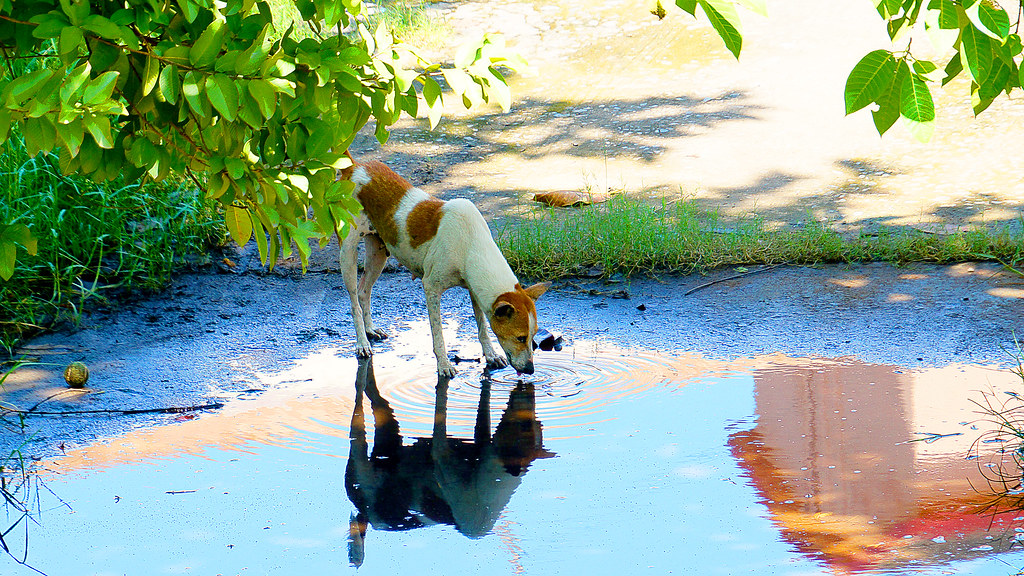
Your dog can’t tell you they’re thirsty, and riding in a trailer dries them out faster than you’d think. Here’s how much to carry, when to stop, and what to watch for.
Here’s the main point: a dog riding in a trailer loses water faster than a dog walking beside you — even though they’re doing no work. Airflow across the tongue, excitement, and heat all pull moisture out. They just aren’t burning calories while it happens.
That surprises people. “He’s only sitting there” is the most common reason dogs get dehydrated on rides.
The simple version: carry roughly 30ml of water per kilo of dog per hour in warm weather, offer it every 20–30 minutes, and learn the two-second gum test. This guide covers the numbers, the gear, and the warning signs that actually matter. 🐾
📋 What’s In This Guide
Why Trailer Riding Dehydrates Dogs
It seems backwards. Your dog is sitting still while you do the work. Why would they need more water than usual?
Panting is how dogs cool down
Dogs barely sweat. They shed heat almost entirely by panting — moving air across a wet tongue so moisture evaporates. Every pant costs water.
In a trailer, three things increase panting: the cabin traps warm air, the excitement of movement raises their breathing rate, and airflow through the mesh dries the tongue faster. Your dog is running their cooling system harder than they would lying at home.
Airflow works against them
Cycling at 15km/h pushes a steady breeze through the cabin. It feels pleasant, and it does help cooling — but it also accelerates evaporation from the mouth and nose. That’s water leaving the body.
This is why dogs often seem fine mid-ride and then drink enormously the moment you get home. They’ve been quietly losing fluid the whole time.
They can’t ask
A dog walking beside you will stop at a puddle, slow down, or look for shade. A dog in a trailer has none of those options. They’re entirely dependent on you noticing.
That’s the real reason hydration matters more in a trailer than on a walk — not because the loss is dramatically higher, but because the feedback loop is broken.
Dogs that ride tend to get less obviously thirsty-looking than dogs that run, because they’re not exerting. Owners read calm as fine. Offer water on a schedule rather than waiting for signals.
How Much Water to Carry
Useful rules of thumb rather than precise science — dogs vary, and so does weather.
The baseline number
A general guide for active warm-weather riding is around 30ml per kilo of body weight, per hour (roughly half an ounce per pound). That’s what to carry, not what they’ll necessarily drink.
Carrying more than you need costs you a little weight. Carrying less than you need can end a ride early.
| Dog Size | Weight | Mild Day (1 hr) | Warm Day (1 hr) | Hot Day (1 hr) |
|---|---|---|---|---|
| Toy | 4–10 lb / 2–4.5 kg | ~100 ml | ~150 ml | ~200 ml |
| Small | 10–25 lb / 4.5–11 kg | ~200 ml | ~330 ml | ~450 ml |
| Medium | 25–50 lb / 11–23 kg | ~400 ml | ~690 ml | ~900 ml |
| Large | 50–80 lb / 23–36 kg | ~650 ml | ~1.1 L | ~1.4 L |
| Extra large | 80–120 lb / 36–54 kg | ~1 L | ~1.6 L | ~2.1 L |
Adjust up for these
- Flat-faced breeds (Pugs, Bulldogs, Boxers, Frenchies) — they pant less efficiently and overheat faster. Add roughly 50%.
- Thick double coats (Huskies, Malamutes, Chows) — they hold heat. Add 30%.
- Senior dogs — less efficient temperature regulation and often reduced thirst drive.
- Puppies — dehydrate faster relative to their size.
- Dry climates and altitude — moisture loss rises noticeably.
Don’t forget yourself
Obvious, but people carrying dog water often forget their own. Two bottles, not one.
When to Offer Water
Schedule beats instinct here, because the signals are unreliable.
The 20–30 minute rule
On warm days, stop and offer water every 20–30 minutes. On mild days, every 45 minutes is usually fine. On a short trip under 20 minutes, water at home before and after is enough.
Your dog won’t always drink. That’s fine — the point is the opportunity, not the volume. A dog offered water six times will drink when they need it.
Always offer at these moments
- Before you set off, especially in summer
- After any climb — even though they weren’t pedalling, cabin temperature rises when you slow down and airflow drops
- Whenever you stop anyway — traffic lights, gates, photos
- Immediately on arriving home
Small amounts, often
A dog that gulps a huge volume after going without can bring it straight back up. Offer modest amounts frequently rather than one big drink at the end. This matters most for deep-chested breeds.
“Don’t wait until your dog looks thirsty. In a trailer, by the time they look thirsty, they’ve been thirsty for a while.” 💧
Alt text: “Cyclist offering water in a collapsible bowl to a dog during a rest stop beside a bike trailer”
Warning Signs to Watch For
Learn these. They take seconds and they’re genuinely useful.
The gum test
Lift your dog’s lip and touch the gum. It should feel slick and wet. Tacky or dry gums mean they need water now.
Press a fingertip against the gum until it blanches white, then release. Colour should return in under two seconds. Slower than that suggests dehydration.
The skin tent test
Gently lift the skin between the shoulder blades and let go. It should snap back immediately. If it settles slowly, that’s a dehydration sign.
Worth knowing: this test is less reliable on very lean dogs, very overweight dogs, and older dogs whose skin has lost elasticity. Use it alongside the gum test, not instead of it.
Behaviour changes
- Heavy, fast panting that doesn’t settle when you stop
- Thick, ropey drool
- Sudden stillness in a normally alert dog
- Restlessness, repeatedly shifting position
- Glazed or unfocused eyes
Bright red or very pale gums, wobbliness, vomiting, collapse, or a body that feels hot to the touch are signs of heat stroke, not simple thirst. Stop immediately, move to shade, wet the paws, belly and ears with cool — not ice-cold — water, and contact a vet straight away. This is a medical emergency.
Hydration Systems Compared
| System | How It Works | Best For | Pros | Watch Out For |
|---|---|---|---|---|
| Collapsible bowl + bottle | Pour when you stop | Almost everyone | Cheap, packs flat, easy to clean | Needs a proper stop each time |
| Squeeze bottle with lid-bowl | Flip-top bowl built in | Quick roadside stops | One-handed, no separate bowl | Smaller capacity |
| In-trailer water bottle | Sipper mounted in cabin | Dogs trained to sippers | Drinks whenever they want | Many dogs never learn to use it |
| Insulated flask | Keeps water cool for hours | Hot climates, long rides | Cool water is far more appealing | Heavier, bulkier |
| Frozen bottle | Freeze overnight, melts as you ride | Very hot days | Doubles as a cabin cooler | Not drinkable for the first hour |
Which should you actually buy?
For nearly everyone, a collapsible bowl plus a bottle is the right answer. It’s cheap, reliable, and works for every dog without training.
Add an insulated flask if you ride in genuine heat — dogs drink noticeably more when the water is cool, and lukewarm water is often refused.
In-cabin sippers sound ideal but disappoint in practice. Most dogs never take to them, and a bottle rattling in the cabin can put a nervous dog off entirely. Try one only if your dog already uses a sipper at home.
Recommended Gear
Collapsible Silicone Bowl & Bottle Set
The default choice, and genuinely hard to improve on. Folds flat into a jersey pocket, works for any dog with no training, and cleans in seconds.
- ✅ Works for every dog immediately — no learning curve at all
- ✅ Folds flat, so there’s no excuse to leave it behind
- ✅ Carabiner clip attaches to the trailer so it’s always with you
- ✅ Silicone doesn’t hold smells the way plastic does
- ⚠️ Get the wide-base version — narrow bowls tip on uneven ground
Opens Amazon.com · Prices update live
Squeeze Bottle With Built-In Bowl
Flip the lid, squeeze, your dog drinks — one hand, no separate bowl, no spillage. Ideal when you’re stopping briefly at lights or gates.
- ✅ Water returns to the bottle when you release — nothing wasted
- ✅ Fits a standard bottle cage on your frame
- ✅ No separate bowl to drop or lose at the roadside
- ✅ Great for short stops where unpacking a bowl isn’t worth it
- ⚠️ Lower capacity — carry a second bottle for rides over an hour
Opens Amazon.com · Prices update live
Insulated Stainless Water Flask
Dogs drink far more readily when water is cool. In summer this single upgrade does more for hydration than any clever bowl design.
- ✅ Cool water gets drunk — lukewarm water frequently gets refused
- ✅ Stays cold all day, even strapped to a hot trailer
- ✅ Stainless doesn’t leach plastic taste in the heat
- ✅ Doubles as a cool compress against ears and belly if your dog overheats
- ⚠️ Heavier than plastic — worth it in summer, overkill in winter
Opens Amazon.com · Prices update live
Cooling Bandana & Mat Set
Hydration and cooling work together. Lower your dog’s temperature and they pant less — which means they lose less water in the first place.
- ✅ Less panting means less water loss — it attacks the cause, not the symptom
- ✅ Bandana cools the neck, where major blood vessels run close to the surface
- ✅ Mat needs no freezer — activates from body weight alone
- ✅ Especially valuable for Pugs, Bulldogs and Boxers
- ⚠️ Re-wet the bandana at stops; once dry it stops working
Opens Amazon.com · Prices update live
If Your Dog Won’t Drink
Extremely common, and usually fixable. Dogs often refuse water away from home simply because the situation is unfamiliar.
Try these, in order
- Use their own bowl from home. Familiar smell and shape matters more than you’d expect.
- Offer cooler water. Lukewarm water sitting in a bottle in the sun is genuinely unappealing.
- Add a splash of low-sodium broth or a little tuna water. Enough to smell interesting, not enough to be a meal.
- Get out of the cabin. Many dogs won’t drink while confined. Lift them out, let them stand, then offer.
- Wet their food before you leave — a meal with added water front-loads hydration.
- Try ice cubes. Some dogs treat them as a toy and take on water almost by accident.
Practise at home first
The travel bowl should not be a novelty introduced at the roadside. Use it in your kitchen for a week beforehand so it’s familiar equipment rather than a strange object.
A tablespoon of low-sodium, onion-free bone broth in the bowl turns refused water into interesting water. Check the label — onion and garlic are toxic to dogs, and many supermarket broths contain both.
Hot Weather Rules
Simple thresholds worth committing to memory.
| Temperature | Water Stops | Ride Length | Extra Steps |
|---|---|---|---|
| Under 15°C / 59°F | Every 45 min | Normal | Watch for cold instead — blanket for thin coats |
| 15–20°C / 59–68°F | Every 30 min | Normal | Open some mesh panels |
| 20–25°C / 68–77°F | Every 20–25 min | Shorten a little | All mesh open, seek shaded routes |
| 25–30°C / 77–86°F | Every 15–20 min | Under 45 min | Cooling mat, early or late rides only |
| Over 30°C / 86°F | — | Don’t ride | Wait for evening. Flat-faced breeds: stop earlier still |
One extra check that costs nothing: press the back of your hand to the pavement for five seconds. If it’s too hot for your hand, it’s radiating heat straight into a low-slung trailer cabin.
Common Mistakes (and How to Fix Them)
Mistake 1: Waiting for signs of thirst
By the time it’s obvious, they’ve been short for a while.
Fix: offer on a schedule, not on signals.
Mistake 2: One big drink at the end
Gulping a large volume can cause vomiting.
Fix: small amounts, frequently.
Mistake 3: Warm water in summer
Dogs routinely refuse lukewarm water.
Fix: insulated flask, or freeze a bottle overnight.
Mistake 4: Offering water inside the cabin
Awkward, spill-prone, and many dogs won’t drink while confined.
Fix: lift them out at stops where it’s safe.
Mistake 5: Forgetting winter hydration
Cold, dry air dehydrates too — people only think about summer.
Fix: still offer water on cold rides, just less often.
Mistake 6: Salty human snacks
Sharing crisps or jerky increases thirst and sodium load.
Fix: plain dog treats only.
Mistake 7: A bowl that tips
Narrow-based bowls spill on grass and gravel — and that water’s gone.
Fix: wide-base collapsible bowl.
Pro Tips
- 💡 Freeze one bottle, carry one liquid. The frozen one cools the cabin, then becomes drinking water as it melts.
- 💡 Clip the bowl to the trailer permanently. The bowl you left on the kitchen counter hydrates nobody.
- 💡 Wet their food before summer rides. A meal with added water front-loads hydration before you leave.
- 💡 Learn the gum test on a healthy day. Knowing what normal feels like is what makes the test useful later.
- 💡 Plan routes past drinking fountains. Free refills mean you can carry less weight.
- 💡 Rinse the bowl at home, not just at stops. Silicone bowls grow a film surprisingly fast in warm weather.
The most common report is that dogs drink far more after a ride than during it. That’s not reassuring — it means they were running a deficit the whole time. Owners who switched to scheduled stops say the post-ride gulping stopped almost entirely.
Frequently Asked Questions
How much water does a dog need on a bike ride?
A useful guide for warm-weather riding is about 30ml per kilo of body weight per hour (roughly half an ounce per pound). A 20kg dog on a warm one-hour ride needs around 600ml carried. Increase by about 50% for flat-faced breeds, and 30% for thick-coated dogs. Carry more than you expect to use.
How often should I stop to give my dog water?
Every 20–30 minutes on warm days, every 45 on mild ones. Your dog won’t drink every time and that’s fine — the point is giving them the chance. Always offer before setting off, after any climb, and immediately on getting home.
How can I tell if my dog is dehydrated?
Two quick checks. Gums should feel slick and wet; press until they blanch and colour should return in under two seconds. Skin lifted between the shoulder blades should snap back instantly. Tacky gums, slow colour return, or slow-settling skin all point to dehydration. Bright red or pale gums with wobbliness is heat stroke — treat as an emergency and call a vet.
My dog won’t drink from a travel bowl. What do I do?
Use their own bowl from home, offer cooler water, and let them out of the trailer first — many dogs won’t drink while confined. If that fails, add a splash of low-sodium, onion-free broth. Most importantly, practise with the travel bowl at home for a week so it isn’t a strange object at the roadside.
Can I give my dog ice-cold water after a ride?
Cool water is fine and often preferred. What to avoid is letting an overheated dog gulp a large volume of very cold water very fast, which can cause vomiting. Offer moderate amounts of cool water repeatedly. If your dog is showing heat stroke signs, cool their body with cool — not ice-cold — water on paws, belly and ears, and contact a vet.
Do dogs need water on short winter rides?
Less often, but yes. Cold air is dry and still pulls moisture out through panting. On a 20-minute winter ride, water before and after is enough. On anything longer, offer at the halfway point. Watch for the opposite problem too — a stationary dog in a headwind gets cold quickly, so add a blanket below 10°C.
Your Final Checklist
✅ Before You Leave
- ☐ Water calculated: ~30ml per kg per hour (more for flat-faced or thick-coated dogs)
- ☐ Bowl packed — ideally clipped permanently to the trailer
- ☐ Water offered at home before setting off
- ☐ Insulated flask or frozen bottle if it’s warm
- ☐ Your own water too
- ☐ Route checked for shade and drinking fountains
✅ During the Ride
- ☐ Stopping every 20–30 min in warm weather
- ☐ Small amounts, offered often
- ☐ Dog lifted out to drink where it’s safe
- ☐ Gum check at the halfway point
- ☐ Shade found for every stop
✅ Warning Signs — Stop Immediately
- ☐ Tacky or dry gums
- ☐ Thick, ropey drool
- ☐ Panting that doesn’t settle when stopped
- ☐ Bright red or pale gums, wobbliness, collapse → vet now
Final Thoughts
Hydration is the easiest part of riding with a dog to get right, and the easiest to forget — because a calm dog in a trailer gives you no signal at all.
Carry roughly 30ml per kilo per hour. Stop every 20–30 minutes when it’s warm. Learn the gum test. Keep the water cool.
Four small habits, and the most common problem on dog bike rides simply stops happening. 💧🐾
Planning a longer ride? The Route Planner builds in rest and hydration stops automatically. Riding in heat? Check the Weather & Comfort tool. Building your kit? See our accessories guide and safety gear guide.