Dog Bike Trailer vs Basket vs Backpack: Which One Should You Buy?

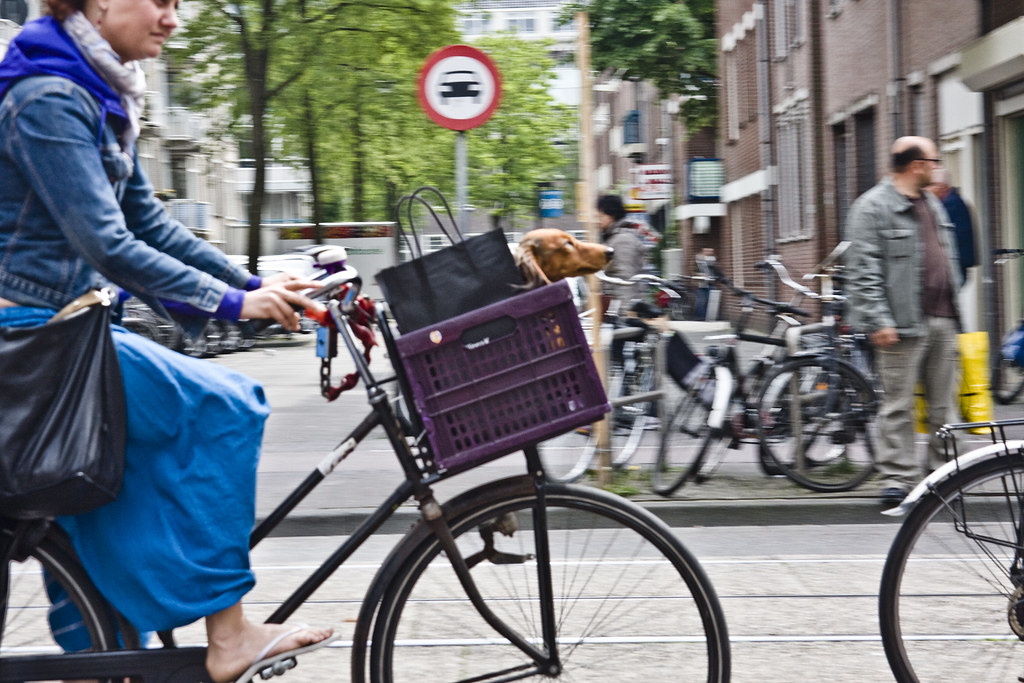
Three ways to bring your dog cycling, and they suit completely different situations. Here’s how to pick the right one first time.
Straight to the answer: the choice comes down to your dog’s weight and how long your rides are. Everything else is detail.
Under 15 lb on short city trips? A basket is fine and genuinely fun. Under 25 lb with a bike you can’t add a hitch to? A backpack carrier works. Anything heavier, or any ride over about 20 minutes? You want a trailer, and it isn’t close.
That’s the short version. But there are real trade-offs inside each option — steering effects, heat, what happens in a fall — that product pages don’t mention. This guide covers all three honestly, including who should avoid each one. 🐾
📋 What’s In This Guide
The Quick Answer
🚲 Buy a Trailer if…
Your dog is over 20 lb, rides last longer than 20 minutes, or you want them to lie down. The default choice for most people.
🧺 Buy a Basket if…
Your dog is under 15 lb, confident, and your trips are short city hops. Fun and social, limited range.
🎒 Buy a Backpack if…
Your dog is under 25 lb, you can’t fit a hitch, or you mix cycling with hiking and transit.
If you’re torn between two, the tiebreaker is almost always ride length. Baskets and backpacks keep a dog sitting upright in one position. That’s fine for fifteen minutes and uncomfortable for an hour. A trailer lets them lie down and change position, which is why it wins for any real distance.
Bike Trailers
An enclosed cabin on two wheels that tows behind your bike from the rear axle.
Why they work
The weight sits on its own wheels, not on you or your bike’s balance. That’s the fundamental advantage — a 60 lb dog in a trailer barely affects your handling, while 60 lb anywhere else on the bike would be unrideable.
Your dog can also lie down, sit up, and turn around. On anything longer than a short trip that matters enormously for comfort. And the enclosure protects from weather, road spray, and other dogs.
Who they’re best for
Almost everyone, honestly. Medium and large dogs have no other realistic option. Small dogs still benefit on longer rides. Senior dogs, anxious dogs, and dogs recovering from surgery all do better in a trailer than a basket.
The honest downsides
- Storage. Even folded, a trailer is bulky. This is the main reason people hesitate.
- Width. You’re wider than your handlebars, which takes adjustment on narrow paths.
- Hitch fitment. Modern thru-axle bikes need an adapter.
- Cost. Generally the most expensive of the three.
- You can’t see your dog while riding, which bothers some owners.
Be honest about where a trailer will live before buying. The most common reason a trailer stops being used isn’t the dog — it’s that getting it out of a cramped hallway is annoying. If space is tight, look specifically for a quick-fold model with removable wheels.
Front & Rear Baskets
An open or semi-enclosed carrier mounted to your handlebars or rear rack.
Why people love them
Your dog is right there. You can talk to them, they can see everything, and for a confident small dog it’s genuinely joyful. They’re also cheap, quick to fit, and add almost nothing to your storage problem.
For a Chihuahua on a ten-minute ride to the park, a front basket is arguably a better experience than a trailer.
Front vs rear
Front-mounted keeps your dog in view and is more social. The trade-off is that it directly affects steering — the weight is on the part of the bike you use to balance.
Rear-mounted affects handling less and can carry slightly more weight. But you can’t see your dog, and they can’t see you, which unsettles some dogs considerably.
The steering issue nobody mentions
This deserves real attention. Putting even 12 lb on your handlebars changes how the bike steers — it feels heavy and slow to turn, and a sudden movement from your dog transmits straight into your steering.
Practise in an empty car park first. Every experienced basket rider says the same thing: the first ride feels alarming, and after twenty minutes you adapt.
The hard limits
- Weight: realistically 15–20 lb maximum. Beyond that, steering becomes genuinely unsafe.
- Ride length: your dog sits upright the whole time. Fine for 20 minutes, not for two hours.
- Protection: in a fall, a basket dog is far more exposed than a trailer dog.
- Weather: minimal shelter from rain, wind or sun.
A dog that jumps from a moving front basket lands in front of your wheel. Every basket needs an internal tether clipped to a body harness, short enough that jumping out is impossible. This is not optional.
Backpack Carriers
A structured pack worn on your back, with your dog inside and often their head poking out.
Where they genuinely shine
Backpacks are the most versatile option. They work on a bike, on a hike, on public transport, and in shops. If your day involves several modes of travel, nothing else comes close.
They’re also the answer when your bike simply can’t take a hitch — folding bikes, some carbon frames, bikes with unusual rear ends.
The physical reality
You’re carrying the entire weight. A 20 lb dog on your back is 20 lb of load on your shoulders, hips and lower back for the whole ride. On a flat 20-minute trip that’s fine. On a hilly hour it’s genuinely hard work.
It also raises your centre of gravity, which makes the bike feel twitchy — especially when you look over your shoulder.
Heat is the real limitation
This is the biggest issue and it’s badly underdiscussed. Your back generates heat. Your dog is pressed against it, inside a padded pack, with limited airflow.
In warm weather a backpack gets hot faster than any other option. Above about 20°C, mesh panels aren’t enough — check your dog frequently and keep trips very short.
Who should avoid them
Anyone with back problems. Anyone whose dog is over about 25 lb. And flat-faced breeds — Pugs, Frenchies, Bulldogs — because the combination of restricted airflow and poor cooling ability is a genuine risk.
“A basket is for the journey being fun. A backpack is for the journey being possible. A trailer is for the journey being comfortable.” 🚲
Alt text: “Comparison of three dog cycling carriers: front bike basket, backpack carrier and enclosed bike trailer”
Full Comparison
| Factor | Bike Trailer | Basket | Backpack |
|---|---|---|---|
| Max dog weight | 40–100+ lb | 15–20 lb | 20–25 lb |
| Comfortable ride length | Hours | Under 30 min | Under 30 min |
| Can the dog lie down? | ✅ Yes | ❌ No | ❌ No |
| Effect on handling | Minimal — own wheels | Significant — steering | Significant — balance |
| Weather protection | ✅ Excellent | Poor | Moderate |
| Heat risk | Manageable with mesh | Low — open air | ⚠️ Highest |
| Protection in a fall | ✅ Best — enclosed, low | Poor — exposed, high | Poor — falls with you |
| Dog stays in view | ❌ No | ✅ Yes (front) | Partly |
| Storage needed | Large | Minimal | Minimal |
| Works off the bike | Stroller mode (some) | ❌ No | ✅ Hiking, transit |
| Physical effort | Towing weight | Low | ⚠️ Carried on your body |
| Typical price | $$–$$$$ | $ | $–$$ |
| Senior / arthritic dogs | ✅ Ideal | Poor — must sit up | Poor — awkward loading |
How to Decide
Work through these in order. The first one that gives a clear answer is your answer.
Question 1: How much does your dog weigh?
Over 25 lb → trailer. Decision made. Baskets and backpacks aren’t safe or comfortable above this, whatever the product page claims.
Under 25 lb, keep going.
Question 2: How long are your typical rides?
Over 30 minutes → trailer. Sitting upright without being able to change position gets uncomfortable, and your dog can’t tell you.
Question 3: Can your bike take a hitch?
Most can, with an adapter for thru-axles. If genuinely not — some folding bikes, some carbon frames — then backpack is your realistic option.
Question 4: What else do you do?
If your trips combine cycling with hiking, trains or shops, a backpack earns its place through versatility even if a trailer would be more comfortable on the bike itself.
Question 5: How much storage do you have?
If a trailer genuinely has nowhere to live, be realistic. A basket that gets used beats a trailer that stays folded behind the sofa.
| Your Situation | Best Choice | Why |
|---|---|---|
| 8 lb Chihuahua, 15-min rides to the park | Front basket | Fun, social, easy — trailer is overkill |
| 18 lb Terrier, hour-long weekend rides | Trailer | Needs to lie down at that duration |
| 22 lb dog, folding bike, mixed bike + train commute | Backpack | Only option that covers all modes |
| 60 lb Labrador, any distance | Trailer | Nothing else is safe at that weight |
| Senior dog with arthritis | Trailer (low entry) | Must lie flat; loading must be easy |
| 12 lb dog, apartment, no storage at all | Basket or folding trailer | Storage is the binding constraint |
| Flat-faced breed (Pug, Frenchie) | Trailer | Needs maximum airflow — avoid backpacks |
Recommended Products
Enclosed Dog Bike Trailer
The right answer for most people. Works for any dog size, any ride length, and any weather. If you’re only buying one thing and your dog is over 20 lb, buy this.
- ✅ Your dog can lie down — the single biggest comfort factor on longer rides
- ✅ Weight rides on its own wheels, so your handling barely changes
- ✅ Best protection in a fall — enclosed and close to the ground
- ✅ Works in rain, wind and cold where the other two don’t
- ⚠️ Check your rear axle type; thru-axle bikes need an adapter
Opens Amazon.com · Prices update live
Front Handlebar Bike Basket With Tether
For confident dogs under 15 lb on short city rides. Your dog rides in front of you, sees everything, and you can talk to them the whole way. Genuinely delightful for the right dog.
- ✅ Dog stays in sight — reassuring for both of you
- ✅ Quick-release bracket so it lifts off in seconds
- ✅ Built-in tether — clip it to a harness, never a collar
- ✅ Almost no storage footprint
- ⚠️ Changes your steering noticeably — practise somewhere empty first
- ⚠️ Not for nervous dogs or rides over half an hour
Opens Amazon.com · Prices update live
Ventilated Dog Backpack Carrier
The multi-mode answer. Bike, hike, train, shop — one carrier covers all of it. Also the solution when your bike simply can’t take a trailer hitch.
- ✅ Works everywhere — no other option is this flexible
- ✅ Hip belt transfers load off your shoulders, which matters a lot
- ✅ No hitch needed — solves folding and carbon-frame bikes
- ✅ Packs down small
- ⚠️ Hottest option — your back radiates heat. Keep summer trips short
- ⚠️ Not suitable for flat-faced breeds or anyone with back problems
Opens Amazon.com · Prices update live
Padded Harness With Safety Tether
Whichever carrier you choose, your dog must be tethered to a body harness. This is the one purchase that’s non-negotiable across all three options.
- ✅ Prevents the worst-case scenario — a dog jumping out mid-ride
- ✅ Spreads force across the chest, never the throat
- ✅ Adjustable length so it’s short enough to actually work
- ✅ Transfers between carriers if you switch later
- ⚠️ Never clip a tether to a collar. Harness only, every time
Opens Amazon.com · Prices update live
Safety Differences
The three options fail in genuinely different ways, and it’s worth understanding how before you choose.
What happens in a fall
Trailer: best outcome by a distance. The trailer is low, enclosed, and on its own wheels. If you fall, it often stays upright entirely.
Basket: worst outcome. Your dog is high up, unprotected, and attached to the part of the bike that hits the ground first.
Backpack: your dog falls with you, at your body weight, and may be landed on.
Heat
Reversed ranking. Baskets are best — fully open air. Trailers are manageable with mesh open. Backpacks are the highest risk because of body heat plus restricted airflow.
Escape risk
Trailers are safest — fully enclosed with a zip. Baskets are highest risk, since a dog can simply stand up and jump. Backpacks sit in between.
All three need a tether. Baskets need it most urgently.
Visibility to traffic
Trailers sit low and are easy to miss — they need a tall flag and lights. Baskets and backpacks keep your dog at or above your own height, so you’re no less visible than riding alone.
For crash protection, a trailer wins clearly. For heat, an open basket wins. For escape prevention, a trailer wins. Since crashes and escapes are the scenarios with the worst outcomes, that’s why trailers are the default recommendation for anything beyond short trips.
Common Mistakes (and How to Fix Them)
Mistake 1: Buying a basket for a dog that’s too heavy
Steering becomes genuinely unsafe above about 15–20 lb.
Fix: weigh your dog honestly and respect the limit.
Mistake 2: No safety tether
The single most dangerous omission, especially in baskets.
Fix: body harness plus a short tether. Always.
Mistake 3: First basket ride on a road
The handling change is genuinely surprising.
Fix: empty car park first, twenty minutes, until it feels normal.
Mistake 4: Backpack in summer
Your back heat plus a padded pack overheats a dog fast.
Fix: keep summer backpack trips very short, or use a trailer instead.
Mistake 5: Buying before checking your axle
Thru-axle bikes need an adapter, and people find out on assembly day.
Fix: photograph your rear axle and check first.
Mistake 6: Ignoring storage reality
A trailer with nowhere to live gets used twice.
Fix: measure your space before ordering, or choose a quick-fold model.
Mistake 7: Choosing on price alone
A cheap basket for a 30 lb dog isn’t a bargain, it’s a hazard.
Fix: let your dog’s weight and ride length decide the category, then shop on price within it.
Pro Tips
- 💡 Borrow before buying if you can. Twenty minutes with a friend’s basket tells you more than any review about whether you’ll tolerate the steering change.
- 💡 Many people end up owning two. A basket for quick trips and a trailer for real rides is a common, sensible combination.
- 💡 Check second-hand for trailers. They’re often barely used — bought by people who didn’t do the storage maths.
- 💡 Weigh your dog on the day you shop. People routinely underestimate by several pounds.
- 💡 For a backpack, load it with something heavy and ride a lap first. Feel the balance change before your dog is in it.
- 💡 Whatever you choose, buy the harness first. It works with all three and you’ll need it regardless.
The most common regret isn’t picking the wrong category — it’s underestimating ride length. People buy a basket for “quick trips,” then discover they enjoy riding with their dog and want to go further. If you think you might ride more, buy for the rides you’ll want in six months.
Frequently Asked Questions
Is a dog bike trailer better than a basket?
For most situations, yes. A trailer lets your dog lie down, carries any size dog, protects them from weather, and offers far better protection in a fall. A basket wins only for very small dogs on short trips, where being able to see and talk to your dog is genuinely nicer. Above 20 lb or 30 minutes, the trailer is clearly better.
What’s the maximum dog weight for a bike basket?
Realistically 15–20 lb, regardless of what the product claims. The limit isn’t the basket breaking — it’s that weight on your handlebars changes steering. Above 20 lb the bike becomes genuinely hard to control, particularly in an emergency swerve. Heavier dogs need a trailer.
Are dog backpack carriers safe for cycling?
They can be, with limits. Keep to dogs under 25 lb, use a pack with a hip belt and real mesh ventilation, and keep rides short. The main risks are heat (your back radiates warmth into the pack) and a raised centre of gravity affecting balance. Avoid entirely for flat-faced breeds and if you have back problems.
Can I use a child bike seat for my dog?
No. Child seats are designed around a child’s body shape and a harness system that fits a torso with shoulders — a dog can twist out of it. There’s no safe way to secure a dog in one. Use a purpose-built dog carrier instead; the three options in this guide all have proper tether points designed for dogs.
Which is best for a senior dog?
A trailer with a low entry, without question. Senior dogs need to lie down and change position, which baskets and backpacks don’t allow. They also often have joint stiffness that makes being lifted into a backpack or held upright in a basket uncomfortable. A low step-in or ramp matters as much as the trailer itself.
Do I need all three?
No, but owning two is common and sensible. A typical pairing is a basket or backpack for quick errands and a trailer for proper rides. If you’re buying just one and your dog is over 20 lb, buy the trailer — it covers every situation, just less conveniently for the very short trips.
Your Buying Checklist
✅ Before You Choose
- ☐ Dog weighed accurately (people underestimate)
- ☐ Typical ride length worked out honestly
- ☐ Longest ride you might realistically want in six months
- ☐ Rear axle type identified (quick-release / thru-axle / bolt-on)
- ☐ Storage space measured
- ☐ Other uses considered (hiking, transit, shops)
✅ Category Decision
- ☐ Over 25 lb → trailer
- ☐ Rides over 30 min → trailer
- ☐ Under 15 lb, short city trips → basket works
- ☐ No hitch possible, or multi-mode travel → backpack
- ☐ Senior, arthritic or flat-faced → trailer
✅ Whatever You Buy
- ☐ Body harness (never tether to a collar)
- ☐ Tether shortened so jumping out is impossible
- ☐ Non-slip surface inside
- ☐ Water and a collapsible bowl
- ☐ Trailer only: tall safety flag and rear lights
- ☐ First ride practised somewhere empty and quiet
Final Thoughts
Three carriers, three genuinely different jobs. The mistake is treating them as interchangeable options at different price points — they’re not.
A basket makes short rides delightful for a small, confident dog. A backpack makes multi-mode journeys possible. A trailer makes long rides comfortable for any dog.
Weigh your dog, be honest about how far you’ll ride, and buy for that. And whichever you pick, get the harness and tether right — that part matters more than the carrier itself. 🚲🐾
Leaning towards a trailer? Read Pet Trailers Explained, or the size-specific guides for lighter dogs and large dogs. Not sure? Take the Match Quiz or check the Compatibility Generator for your bike.