Winter Cycling With Your Dog: Staying Warm, Safe and Seen

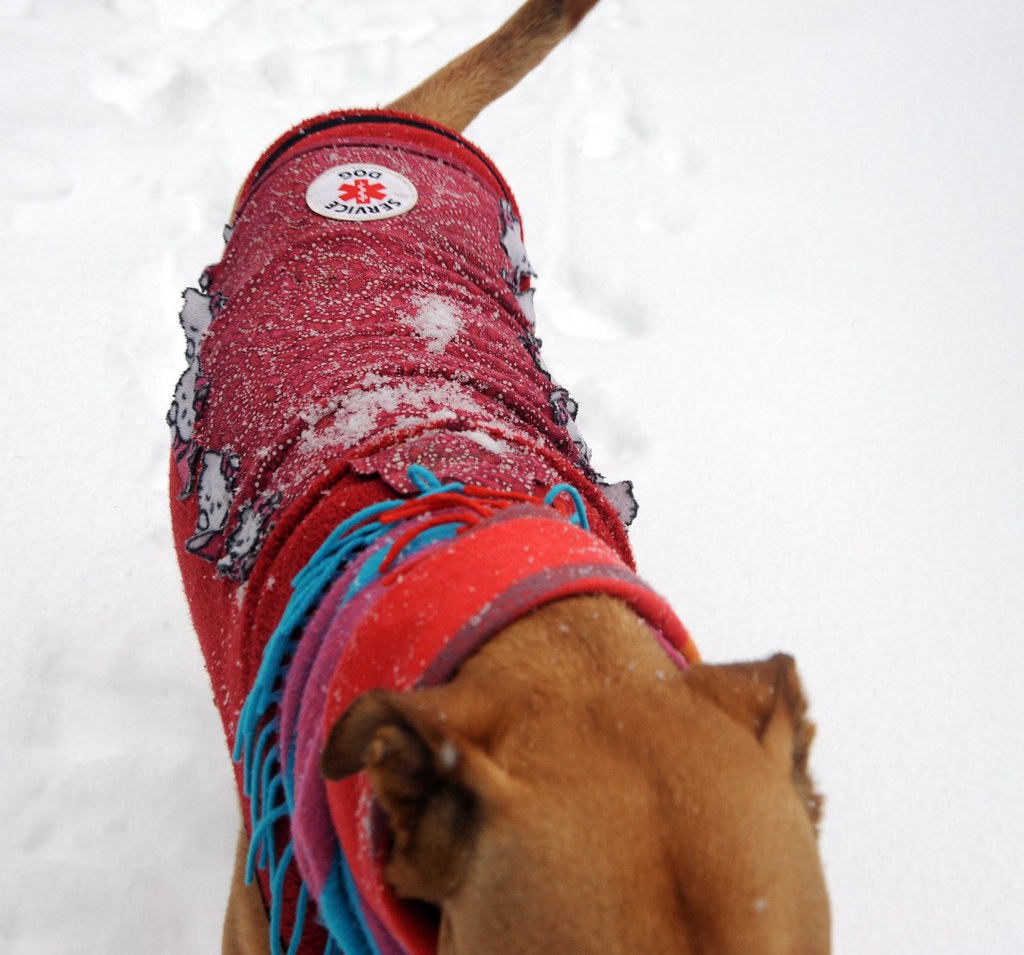
You’re warm from pedalling. Your dog is sitting still in a headwind. That gap is the whole problem — and it’s easy to fix once you understand it.
The main point, right away: in winter, you and your dog are having completely different experiences. You’re generating heat with every pedal stroke. Your dog is motionless in a 15 mph wind, producing almost nothing.
That’s why the classic winter mistake is judging the temperature by how you feel. If you’re comfortable in a light jacket, your dog is probably cold.
The good news: winter riding with a dog is genuinely lovely — quiet paths, no overheating worries, no bugs. You just need to flip your thinking about temperature, add a few cheap things, and understand road salt. Here’s how. 🐾
📋 What’s In This Guide
The Warmth Gap
Understanding this one thing fixes most winter problems.
You are generating heat. Your dog isn’t.
Cycling is exercise. Your muscles produce heat continuously, which is why you can ride in 5°C in a thin jacket and feel fine after ten minutes.
Your dog is lying still. Their only heat source is their resting metabolism, which is a fraction of what your working legs produce. Same air, completely different experience.
Wind chill hits a stationary passenger harder
Riding at 15 mph creates a 15 mph wind. For you, that wind is cooling — welcome, even. For your dog, it’s stripping heat away from a body that isn’t replacing it.
The effective temperature inside a ventilated trailer at speed can be several degrees below the actual air temperature. A 6°C day feels more like 1°C to a dog sitting in moving air.
Small dogs lose heat fastest
This is basic physics: smaller bodies have more surface area relative to their volume, so they shed heat faster. A Chihuahua cools down dramatically quicker than a Labrador in identical conditions.
Thin coats, low body fat, and short legs (closer to cold ground) all compound it.
Don’t ask “is it cold out?” Ask: “would my dog be comfortable lying still outside, in a breeze, for the length of this ride?” If the answer is no, they need a blanket, a coat, or a shorter trip.
How Cold Is Too Cold?
Rough thresholds. Adjust for your individual dog — these are starting points, not rules.
| Temperature | Small / Thin-Coated | Medium Dogs | Large / Double-Coated | Ride Length |
|---|---|---|---|---|
| 10–15°C / 50–59°F | Blanket | Fine as normal | Comfortable | Normal |
| 5–10°C / 41–50°F | Coat + blanket | Blanket | Fine | Normal |
| 0–5°C / 32–41°F | Coat + blanket, short trips | Coat or thick blanket | Blanket | Shorten |
| -5–0°C / 23–32°F | Consider skipping | Coat + blanket, short | Coat or blanket | Under 30 min |
| Below -5°C / 23°F | Don’t ride | Don’t ride | Very short only, full kit | Under 15 min |
Things that make it effectively colder
- Wet. A damp dog loses heat far faster. Rain moves every threshold up by several degrees.
- Wind. Both weather wind and your riding speed.
- Longer rides. Cold is cumulative — 20 minutes at 3°C is very different from an hour.
- Age. Puppies and seniors regulate temperature poorly.
- Health. Thin, unwell, or recovering dogs feel cold sooner.
Things that help
- Sun. A bright winter day inside an enclosed cabin is noticeably warmer.
- Rain cover closed (leaving an air gap) traps warmth considerably.
- Sheltered routes. Tree lines and buildings cut wind dramatically.
Breed and Coat Differences
Two dogs of the same weight can have completely different winter tolerance.
Double-coated breeds
Huskies, Malamutes, German Shepherds, Newfoundlands, Bernese. These dogs have a dense insulating undercoat beneath a weatherproof topcoat, and genuinely enjoy cold.
For them, winter is the best riding season. They’ll be comfortable when you’re not. Just don’t over-dress them — a coat on a Husky in 2°C can cause overheating.
Single-coated and thin-coated breeds
Greyhounds, Whippets, Boxers, Dobermans, Vizslas, most terriers. Very little insulation and often low body fat.
These dogs feel cold early and need a proper fitted coat well before you’d expect. Greyhounds and Whippets in particular are famously cold-sensitive.
Small dogs generally
Regardless of coat type, small dogs lose heat faster. A Yorkie with long hair is still a small body in a big wind.
Puppies and seniors
Both regulate temperature poorly — puppies haven’t developed the ability yet, seniors have lost some of it. Older dogs with arthritis also stiffen noticeably in cold, which can make a ride uncomfortable in a way they can’t communicate.
Flat-faced breeds
Interesting case. Pugs, Frenchies and Bulldogs struggle in heat, but they’re not winter-proof either — many have thin coats and low tolerance for cold air. They’re comfortable in a narrower band than most dogs.
“Dress your dog for standing still outside, not for the ride you’re about to have. You’ll warm up. They won’t.” ❄️
Alt text: “Dog wrapped in a fleece blanket inside a bike trailer with rain cover partly closed on a frosty winter ride”
Keeping the Cabin Warm
Cheap and effective, in order of impact.
1. Insulate from below first
Most heat is lost downward, into the cold floor. A thin fabric floor over cold air is essentially a heat sink.
Put a foam pad or folded blanket underneath your dog’s bedding. This single change does more than anything you put on top.
2. A blanket they can burrow into
Don’t just lay a blanket over your dog — many will shrug it off. Instead, create a loose nest they can push into themselves. Fleece works well and dries fast.
3. Close the rain cover, leave an air gap
The rain cover blocks wind, which is most of the problem. But never seal the cabin completely — you need airflow to prevent condensation, which makes everything damp and therefore colder.
Aim for the cover down with a hand’s-width gap at one corner.
4. A fitted coat for thin-coated dogs
For Greyhounds, Whippets and similar, a coat matters more than any blanket because it stays on the dog when they move.
5. Pre-warm the cabin
Bring the blanket in from a warm house rather than a cold garage. Starting warm is much easier than warming up in a headwind.
They can cause burns against skin, and a dog can’t move away from one in a confined cabin. If you want extra warmth, use a self-heating pet mat that reflects your dog’s own body heat — no external heat source, no burn risk.
Salt, Grit and Paw Care
The winter hazard people forget entirely, because the dog spends most of the ride off the ground.
Why road salt matters
De-icing salt is harsh on paw pads. It causes irritation, cracking, and stinging on contact — worse if there’s already a small cut.
The bigger risk is ingestion. Dogs lick their paws. Salt and de-icing chemicals swallowed in quantity can cause stomach upset and, with some products, more serious problems.
Where your dog is exposed
Not while riding — at every stop. Loading, unloading, and stretch breaks all happen on treated pavement.
Simple prevention
- Paw balm before you leave. A wax barrier reduces salt contact and stops pads drying out.
- Boots if your dog tolerates them. The complete solution, though many dogs need time to accept them.
- Wipe paws at every stop. A damp cloth in a zip bag takes seconds.
- Rinse properly at home. Lukewarm water, dry thoroughly between the toes.
- Check for cracks weekly. Winter dries pads out; catching it early prevents painful splits.
Snow between the toes
In snowy conditions, ice balls form between the toes of long-haired dogs and become genuinely painful. Trim the fur between the pads in winter, and use balm — it makes snow much less likely to stick.
Being Seen in Winter
Winter’s biggest safety issue isn’t cold. It’s that it’s dark for most of the useful day, and a trailer sits below the sight line of most drivers.
Assume you’re invisible
Winter light is flat and low. Add rain on a windscreen and a driver’s ability to pick out a low trailer drops sharply.
What actually works
- Two rear lights, not one. Two lights communicate width; one reads as a bike.
- A tall flag with reflective panel. Lifts a marker to window height.
- Reflective tape on the wheels. Moving reflectors are far more noticeable than static ones — this is the single best cheap upgrade.
- Flashing mode during the day. On grey winter afternoons, daytime running lights genuinely help.
- A reflective cover or vest on the trailer body.
Battery reality
Cold drains batteries much faster than mild weather. A light that lasts eight hours in summer might manage half that at freezing.
Use USB rechargeables, charge before every ride, and carry a spare if you’re riding after dark.
Recommended Winter Gear
Fitted Winter Dog Coat
For any thin-coated or small dog, this does more than anything else. Unlike a blanket, it stays on when your dog shifts position, and it covers the chest and belly where heat is lost fastest.
- ✅ Stays put when your dog moves — the main advantage over a blanket
- ✅ Windproof outer blocks the chill your riding speed creates
- ✅ Belly coverage matters most for short-legged dogs close to cold ground
- ✅ Reflective trim adds visibility at rest stops
- ⚠️ Check it doesn’t restrict the harness — try both on together first
- ⚠️ Double-coated breeds usually don’t need one and can overheat in it
Opens Amazon.com · Prices update live
Paw Balm & Winter Boots Set
Road salt is the winter hazard most owners overlook. Balm creates a barrier; boots remove the problem entirely. Both also stop snow balling between the toes.
- ✅ Blocks salt contact — prevents cracked, stinging pads
- ✅ Reduces licking, which is how salt gets swallowed
- ✅ Dual-strap boots stay on; single-strap versions come off constantly
- ✅ Balm works year-round — hot pavement in summer too
- ⚠️ Introduce boots indoors first; most dogs walk strangely for a few minutes
Opens Amazon.com · Prices update live
USB Rechargeable Light Set
Winter is dark for most of the usable day. Two rear lights on the trailer communicate both presence and width — and USB charging means the cold won’t leave you with dead batteries.
- ✅ Two lights show width — critical for a trailer that’s wider than your bike
- ✅ Rechargeable — cold kills disposable batteries fast
- ✅ Run flashing in daylight on grey afternoons; steady after dark
- ✅ Charge before every winter ride as routine
- ⚠️ Confirm water-resistant, not just “splash proof” — winter roads are filthy
Opens Amazon.com · Prices update live
Self-Heating Thermal Pet Mat
No batteries, no electricity, no burn risk. A reflective layer bounces your dog’s own body heat back at them — genuinely effective and completely safe in a cabin your dog can’t leave.
- ✅ No burn risk — unlike heat packs, which are genuinely unsafe here
- ✅ Insulates from the cold floor, where most heat is lost
- ✅ Non-slip base doubles as your grip mat
- ✅ Works instantly — no charging or preparation
- ⚠️ Trim to fit; a mat that curls up the walls bunches under your dog
Opens Amazon.com · Prices update live
Riding on Wet and Icy Roads
Your handling changes in winter, and you’re towing weight.
| Condition | What Changes | What To Do |
|---|---|---|
| Wet roads | Braking distance grows substantially with a loaded trailer | Brake much earlier; avoid painted lines and metal covers |
| Black ice | No warning, no grip, and a trailer can jackknife | Don’t ride. Not worth it — walk instead |
| Slush | Hides potholes; sprays your dog through mesh | Slow down; close the rain cover partway |
| Packed snow | Surprisingly rideable but braking is poor | Lower tyre pressure slightly; very gentle braking |
| Crosswinds | The cabin acts as a sail — worse in winter storms | Slow down; grip firmly; avoid exposed routes |
| Wet leaves | As slippery as ice, and common in early winter | Avoid corners on leaf cover entirely |
The one rule worth committing to
If you’d hesitate to ride solo, don’t ride with your dog. Your dog has no say in the risk you’re taking and can’t brace for a fall. Winter offers plenty of good days — skip the marginal ones.
Warning Signs of Cold Stress
Dogs hide discomfort well. Check at every stop rather than waiting for obvious signals.
Early signs
- Shivering (the clearest early indicator)
- Curling tightly into a ball
- Tucking the nose under a paw or tail
- Reluctance to settle, shifting repeatedly
Getting serious
- Shivering that stops while the dog still feels cold — this is a warning, not improvement
- Lethargy, slow responses
- Cold ears, paws and tail to the touch
- Pale gums
- Stiff, awkward movement when they get out
Head home or somewhere warm immediately. Wrap your dog in a dry blanket and warm them gradually — no hot water bottles, no hair dryers, no direct heat. If they stay lethargic, are unresponsive, or have pale gums, contact a vet. Hypothermia is a genuine emergency and warming too fast can make it worse.
Common Mistakes (and How to Fix Them)
Mistake 1: Judging temperature by how you feel
You’re exercising; your dog isn’t.
Fix: ask whether they’d be comfortable standing still outside in a breeze.
Mistake 2: Sealing the cabin completely
Traps moisture, everything gets damp, damp is colder.
Fix: cover down, air gap at one corner.
Mistake 3: Blanket on top only
Heat escapes downward into the cold floor.
Fix: insulate underneath first, then add a blanket on top.
Mistake 4: Ignoring road salt
Cracked pads and salt ingestion from licking.
Fix: balm before, wipe at stops, rinse at home.
Mistake 5: Coating a double-coated dog
Huskies and Shepherds can overheat in a coat even in freezing weather.
Fix: skip the coat, offer a blanket they can choose to use.
Mistake 6: Old batteries in winter lights
Cold drains them far faster than you’d expect.
Fix: USB rechargeables, charged before every ride.
Mistake 7: Riding on ice
A jackknifed trailer on black ice is genuinely dangerous.
Fix: if there’s any chance of ice, walk instead.
Pro Tips
- 💡 Keep the blanket indoors, not in the garage. Starting warm beats warming up in a headwind.
- 💡 Ride into the wind first, home with it behind you. The return leg is when your dog is coldest — make it the easier one.
- 💡 Keep a spare dry blanket in the car. A damp dog in a damp blanket stays cold all the way home.
- 💡 Winter rides are the best time for training. Paths are empty, so there’s far less for a nervous dog to react to.
- 💡 Touch their ears at every stop. Quickest reliable check — cold ears mean a cold dog.
- 💡 Shorten rides, increase frequency. Three fifteen-minute rides beat one long cold one.
The most common realisation: they’d been under-dressing their dog for months without knowing. Owners who added a coat and floor insulation describe dogs that suddenly started settling on winter rides instead of fidgeting the whole way.
Frequently Asked Questions
How cold is too cold for a dog in a bike trailer?
As a guide: below 0°C (32°F), small and thin-coated dogs should have very short trips or stay home. Below -5°C (23°F), most dogs shouldn’t ride at all — only large double-coated breeds in full kit, for under 15 minutes. Remember that riding speed creates wind chill, so the effective temperature is several degrees lower than the forecast.
Does my dog need a coat in the trailer?
It depends on the coat they were born with. Thin-coated and small dogs — Greyhounds, Whippets, terriers, Chihuahuas — need one below about 10°C. Double-coated breeds like Huskies and Shepherds usually don’t, and can overheat in one. A coat beats a blanket because it stays on when your dog shifts position.
Is road salt dangerous for dogs?
Yes, in two ways. It irritates and cracks paw pads on contact, and dogs swallow it when licking their paws, which can cause stomach upset. Use paw balm before you leave, wipe paws at every stop, and rinse with lukewarm water at home. Boots remove the problem entirely if your dog tolerates them.
Can I use a heat pack to keep my dog warm?
No. Heat packs and hot water bottles can cause burns, and a dog in a confined cabin can’t move away from one. Use a self-heating thermal mat instead — it reflects your dog’s own body heat with no external heat source and no burn risk. Insulating underneath your dog also does more than anything placed on top.
How do I know if my dog is too cold?
Early signs are shivering, curling tightly, and tucking the nose away. Check their ears at every stop — cold ears are the quickest reliable indicator. More serious: shivering that stops while they’re still cold, lethargy, pale gums, or stiff movement. Those mean head home immediately, warm them gradually, and call a vet if they don’t improve.
Should I ride in snow or ice?
Packed snow is often fine with lower tyre pressure and gentle braking. Ice — especially black ice — is a no. A trailer can jackknife with no warning, and your dog has no way to brace. Wet leaves are nearly as slippery and catch people out in early winter. If you’d hesitate riding solo, don’t ride with your dog.
Winter Ride Checklist
✅ Before You Go
- ☐ Temperature checked and wind chill considered
- ☐ Insulation under the bedding, not just on top
- ☐ Blanket brought from indoors, not the garage
- ☐ Coat fitted if thin-coated or small (skip for double coats)
- ☐ Paw balm applied, or boots on
- ☐ Lights charged — two on the rear
- ☐ Tall flag with reflective panel fitted
- ☐ Reflective tape on the wheels
- ☐ Route chosen for shelter and gritted surfaces
- ☐ Ride shortened for the conditions
✅ During the Ride
- ☐ Rain cover down with an air gap — never fully sealed
- ☐ Ears checked at every stop
- ☐ Watching for shivering or tight curling
- ☐ Braking much earlier than usual
- ☐ Avoiding ice, wet leaves, painted lines and metal covers
- ☐ Water still offered — cold air dehydrates too
✅ Back Home
- ☐ Paws rinsed with lukewarm water, dried between the toes
- ☐ Dog dried thoroughly if damp
- ☐ Pads checked for cracks or salt irritation
- ☐ Blanket dried before next time
- ☐ Trailer rinsed — road salt corrodes bearings and frames
Final Thoughts
Winter riding with a dog is quieter, cooler and often more pleasant than summer — no overheating worries, no crowded paths, no insects. It just needs a different mindset.
Remember the warmth gap: you’re generating heat and your dog isn’t. Insulate from below, block the wind but keep airflow, protect against salt, and light yourself up like it’s midnight.
Do that, and winter becomes a season you ride through rather than wait out. 🚲❄️
Check conditions with the Weather & Comfort tool. Building your winter kit? See the safety gear guide and accessories guide. Riding off-road in winter? Read Trail Riding With Your Dog. Dog not settled yet? Try the 7-day training plan.